
























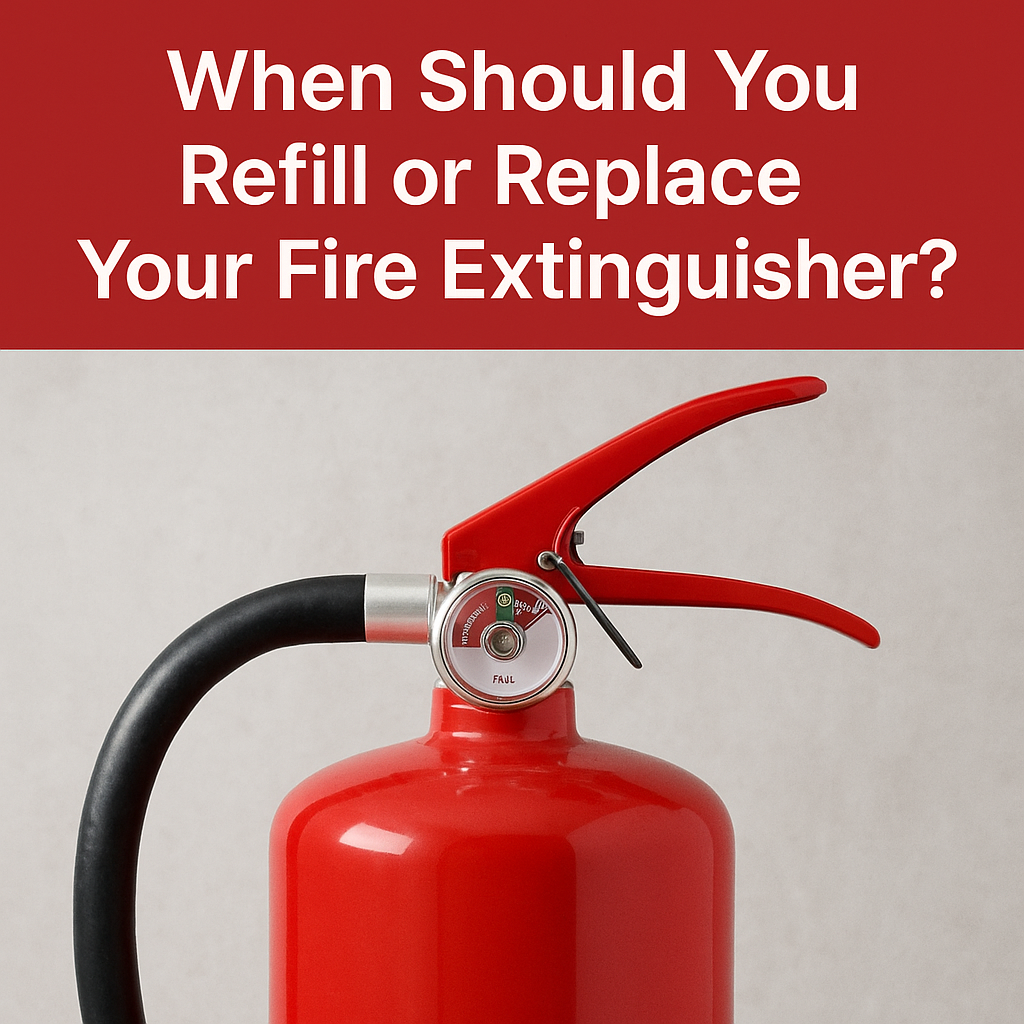
Fire extinguishers are an important safety device for the home, office, and other commercial locations. It’s crucial to know when to refill a fire extinguisher or replace it. However, many people forget to regularly check their extinguisher and find it doesn’t work in the case of a fire. In this blog, we’ll cover everything you need to know on when to refill, recharge, and replace fire extinguishers.
When Should You Refill Your Fire Extinguisher?
Fire extinguishers can be refilled after use or if they have lost pressure over time. Not all extinguishers are designed to be refilled, disposable or small models are only meant to be used once and should be replaced.
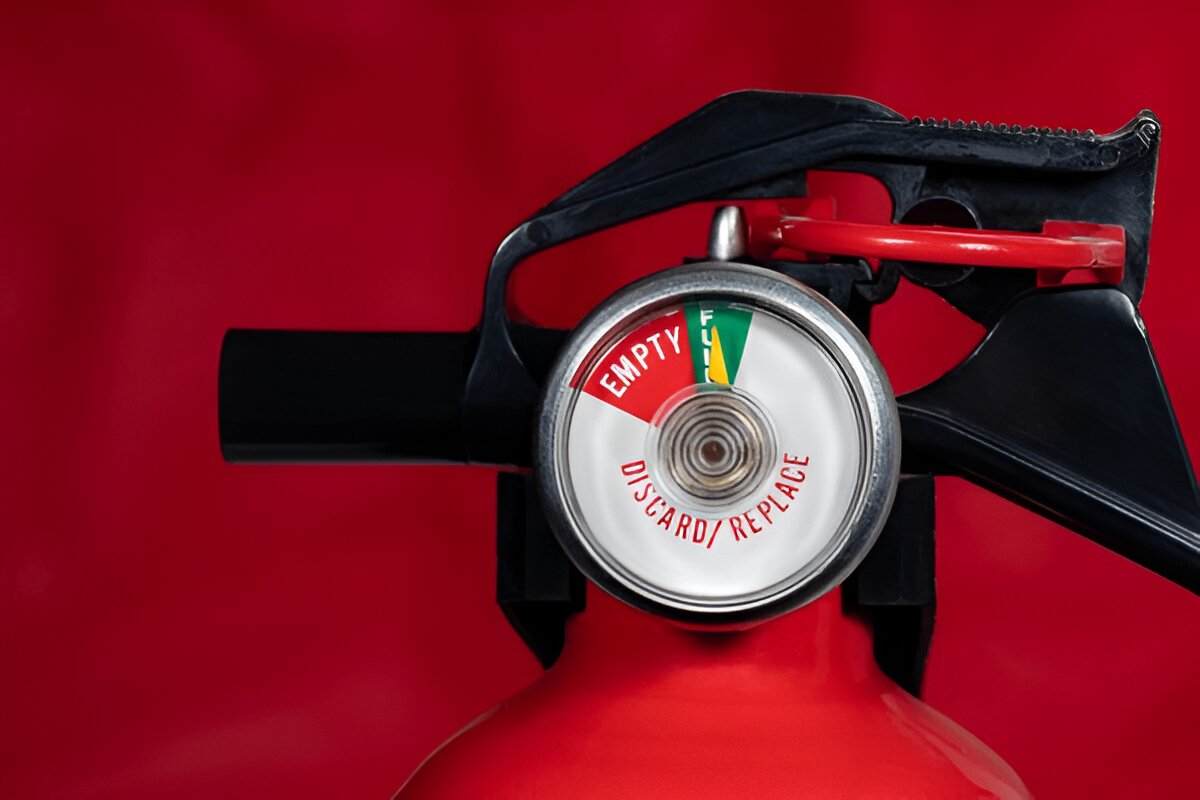
There are a few ways to tell if your fire extinguisher needs to be refilled. The most obvious sign is if the pressure gauge on the extinguisher is in the red zone, this means the pressure is too low and the extinguisher will not work properly. Another way to tell is if the extinguisher has been partially or fully discharged. Even if only a small amount of extinguishing agent was released, a refill is necessary to bring it back to full working condition.
Fire extinguishers do not always need to be refilled after use, it depends on the type of extinguisher and how much was released. If only a small amount was accidentally released and the pressure gauge still reads full, some extinguishers may not need a refill. However, it is recommended to have them inspected by a professional after any use.
Fire extinguishers are typically checked and serviced at least once a year as part of a regular maintenance schedule. However, extinguishers in high-use or high-risk areas may need more frequent inspections. Refilling an extinguisher ensures it is in working order and meets all safety requirements.
How to Refill or Recharge a Fire Extinguisher
Refilling your extinguisher is a dangerous job; hence, it should be left to trained professionals. Fire extinguishers have very heavy chemicals under high pressure in them, and you don’t want to be doing a refill at home.
The first step in the refill process is to remove the empty agent. This is followed by a visual inspection of the cylinder for signs of wear, corrosion, or other damage. All faulty and worn parts are replaced and finally, it is re-filled with the extinguishing agent.
Also, it is important to know the difference between refilling and recharging. The process of refilling typically indicates the addition of a new extinguishing agent to a used or empty unit. Recharging usually means restoring pressure to the extinguisher, but not necessarily changing the agent. Each method ensures the extinguisher is fully operational.
Safety checks are the same for both; check for corrosion, leaks, damaged hoses, or missing safety pins. After a refill or recharge, you’ll want to test your extinguisher to make sure it has the proper pressure and operation.
When to Replace Instead of Refilling Your Fire Extinguisher
Sometimes, a fire extinguisher is more easily replaced than recharged. If the cylinder of the fire extinguisher is badly corroded, dented or buckled, or the safety pin and tamper seal are broken, the fire extinguisher may not be safe to refill. Buying a new extinguisher can ensure dependable fire safety.
Fire extinguishers last between 10 and 15 years on average depending on the type and amount of use. While many fire extinguishers can be refilled multiple times, it may be that the number of refills weakens the cylinder or damages other internal parts. Typically, the number of allowable refills is stated by the manufacturer and filling the extinguisher beyond that number may no longer meet safety standards.
It may also be obvious that a fire extinguisher needs to be replaced. Visible rust, cracks, a broken pressure gauge or other visible signs of damage, or an inability to hold pressure that has not been repaired can all be reasons a fire extinguisher needs to be replaced. Some extinguishers that have never been used may also need to be replaced, even if it is well within the 10 to 15 years of average use.
How to Check If Your Fire Extinguisher Is Full or Empty
Testing to see whether your fire extinguisher is empty or full is not a complicated process, but it is one that should be done frequently. First, you can look at the pressure gauge on the extinguisher. The gauge is generally a green zone, and if the needle is in the red zone, it may be necessary to refill or replace the extinguisher. Another easy way to tell whether an extinguisher is full or not is its weight. An empty extinguisher is much lighter than one that is full, so compare the weight with the label on the extinguisher to get an accurate reading.
As you do this, it is important to follow a few safety tips. Check to make sure the pin is in place, the seal is not broken, and the unit is kept upright. Avoid shaking or tampering with the extinguisher in any way that may cause it to accidentally discharge.
 Fire Extinguisher Expiry and Safety Checks
Fire extinguishers also expire. The date of expiration is printed on the label or stamped on the cylinder of the extinguisher. It is not recommended to use an expired fire extinguisher as the chemicals may have degraded and the pressurized container may have weakened.
To know if an extinguisher has expired, check the label or stamp on the cylinder for the date of manufacture or expiration. If the extinguisher is beyond its recommended service life, it should be replaced. Safety inspections should also include checking that the pressure gauge is in the operating range, the hose is not cracked or damaged, and there are no visible signs of damage.
If a fire extinguisher is expired, even if it is full, it can not be safe to use. Expired extinguishers should be disposed of properly according to local regulations and replaced with a new, certified unit.
You may also like to read: Which Fire Extinguisher to Use in a Kitchen?
Should You Refill Fire Extinguisher or Replace it?
Recharging a fire extinguisher is the preferred method when it is still in good shape, has been partially emptied, and is still within its service life. Frequent professional refills keep it pressurized, swap out old parts, and make it fully functional.
Replacement is a better and more cost-effective solution if your extinguisher is damaged, old, or repeatedly losing pressure. Whether you should refill or replace your fire extinguisher is based on age, usage and safety standards compliance.
Learn how to know when to refill fire extinguisher and when to replace it. Proper inspections, refilling, and replacements are key to fire safety in your home or business.
Final Thoughts
A fire extinguisher is only useful if it’s fully functional. Regular inspections and scheduled refills and replacements maintain safety for both you and your property. If you are a residential or commercial customer in a home, office, or business facility, Hac & Sons can provide hassle-free and dependable fire extinguisher services. When you’re ready, contact Hac & Sons today and make sure your fire protection equipment is always ready when you need it most.