





















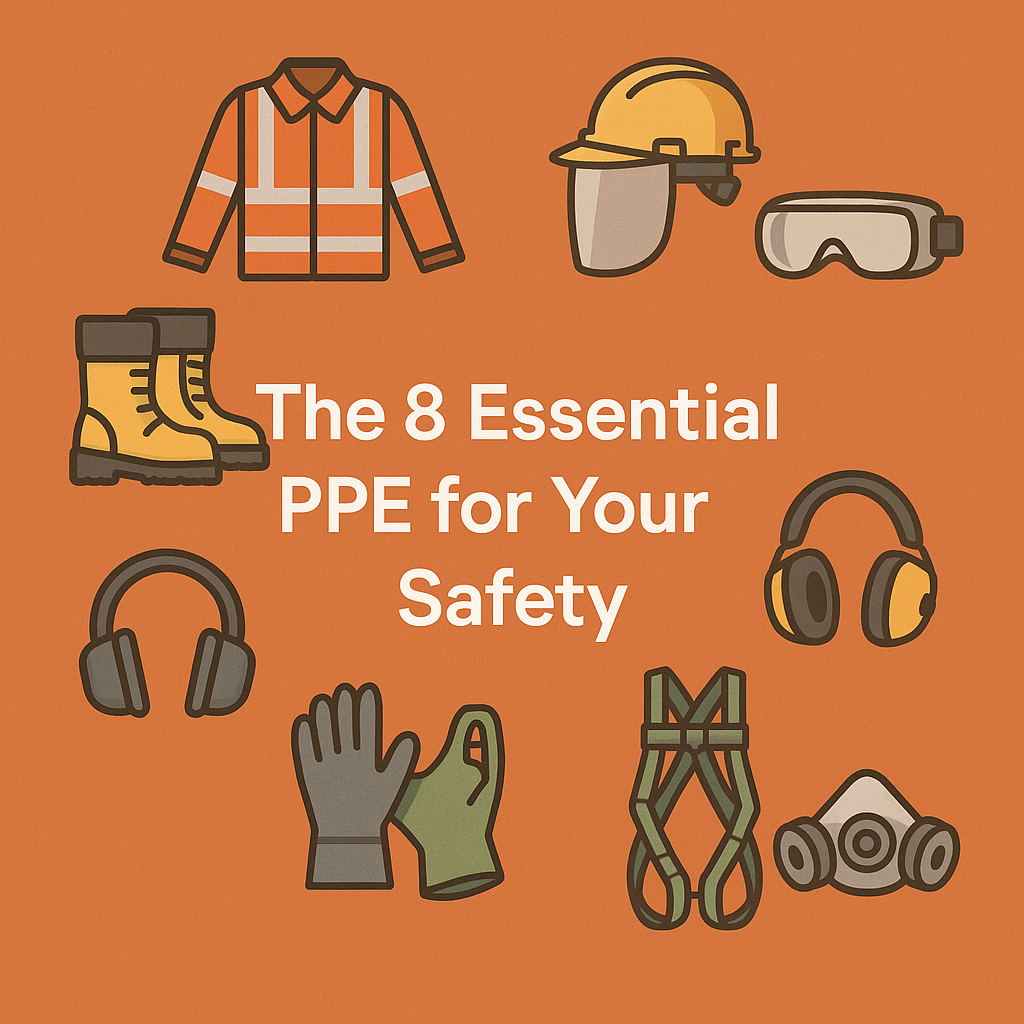
PPE protects workers from common job hazards like impact, heat, chemicals, dust, noise and falls. It helps prevent injuries and gives workers the confidence to do their tasks safely.
This guide explains the eight main PPE categories used in workplaces today. Let’s get right into it!
-
Safety Footwear
Safety footwear keeps the feet safe from falling objects, sharp materials on the floor, slips and electrical risks.
Safety shoes have steel or composite toe caps that stop heavy objects from injuring the toes. Composite toe caps feel lighter, which helps during long shifts. Many shoes also have puncture resistant midsoles to stop nails or sharp metal from going through the sole. Good grip patterns on the bottom help prevent slips on oily or wet floors.
A small detail many people forget is the insole. A worn insole affects balance and can cause knee or lower back pain over time. Footwear should also fit properly. If the shoe is too big, the foot moves inside during impact, which reduces protection.
-
Safety Clothing
Safety clothing protects the body from sparks, heat, dirt, chemicals and low visibility.
How does high visibility clothing help?
High visibility vests and jackets make workers easier to see in busy areas. Bright colours and reflective strips help drivers and machine operators spot workers from far away. Some reflective strips fade after washing, so it helps to check their brightness under actual workplace lighting.
When do workers need flame resistant clothing?
Flame resistant clothes protect workers who deal with welding, metal grinding or electrical work. These coveralls reduce the spread of flame and lower heat transfer. Newer FR fabrics are lighter and more breathable, which makes long shifts more comfortable.
Safety clothing should not be too loose or too tight. Workers should be able to bend, lift or climb without the clothing pulling or catching on anything.
-
Head and Face Protection
Head and face protection prevents injuries from falling objects, sparks, debris and chemicals.
What makes a helmet safe?
A helmet protects the head by spreading force across the shell while the internal suspension absorbs shock. Helmets wear out over time. Sunlight, drops and daily use weaken the shell and straps. Workers should check for cracks around the edges and test if the straps feel stiff. If the suspension becomes hard, it is better to replace the helmet.
When should workers use a face shield?
Face shields protect the entire face during grinding, drilling or chemical work. The visor should be clear and scratch free. Even small scratches can block vision under bright lights. An adjustable headband helps the shield stay steady without hurting the forehead.
-
Eye Protection
Eye protection stops dust, sparks, flying particles and chemical droplets from entering the eyes.
Goggles and safety glasses often use polycarbonate lenses, which are strong and light. Fogging is a common problem in warm or humid areas. Anti fog coating or indirect ventilation helps keep the lenses clear. Workers who wear prescription glasses can use over the glass models for a better seal.
Eye protection is needed during grinding, drilling, mixing chemicals or working in dusty areas.
-
Hearing Protection
Hearing protection reduces harm from loud machines and continuous noise in workplaces.
Ear plugs block steady noise and are comfortable for long shifts. Ear muffs cover the whole ear and help with very loud sounds. The seal around the ear is important. If ear muffs sit on top of helmet straps or glasses arms, the seal breaks and noise enters easily. Workers should check if the cushions fit evenly around the ear.
Hearing loss builds slowly and often without pain, so consistent protection is helpful.
-
Hand Protection
Hand Protection equipment protects the hands from cuts, chemicals, heat, rough surfaces and tool injuries.
Cut resistant gloves help when handling metal sheets or sharp tools. Chemical resistant gloves protect the skin from oils, solvents and other liquids. Heat resistant gloves allow workers to handle hot items in kitchens, foundries or manufacturing plants.
A glove should fit well. A loose glove reduces accuracy, and a tight glove makes the hand tired. Workers should bend their fingers inside the glove to check comfort and grip before starting work.
-
Fall Protection
Fall protection keeps workers safe when working at height.
A safety harness reduces injury by spreading force across the body during a fall. The straps should sit flat and snug. Loose straps let the worker slide into the harness during a fall, which increases risk.
Workers should check the stitching, buckles and D rings before each shift. Sunlight, dirt and moisture weaken the straps faster than people expect. A strong harness also depends on a good anchor point and lifeline.
-
Respirators
Respirators protect workers from dust, fumes, gases and fine particles.
Disposable respirators like N95 models work well for dust and light particles. Half face respirators with replaceable filters help when dealing with gases, solvents or strong fumes. A respirator works best when it seals properly around the nose and chin. Even small gaps reduce the level of protection.
Filters should be replaced when breathing feels harder, even if the filter looks clean.
Final Thoughts
PPE works best when workers know how each item protects them and how to check it before use. Simple habits like tightening straps, replacing worn parts and choosing the right material can improve safety on the job.
HAC & Sons offers high quality PPE that supports workers in many environments. If you want trusted safety gear for your team, reach out to HAC & Sons and get guidance on choosing the right equipment.
FAQs
When should PPE be replaced even if it looks fine?
PPE should be replaced when straps become stiff, padding thins out, filtration becomes harder, soles lose grip or expiry dates pass, even if the item still looks normal.
Why does PPE fit matter so much?
PPE works properly only when it fits the body. Loose or tight gear reduces protection and makes movement harder. Proper fit also helps workers stay comfortable during long shifts.
Is PPE still needed if the workplace looks safe?
Yes. Risks can appear suddenly during lifting, cutting, welding, mixing chemicals or moving machines. PPE protects even when the hazard is unexpected.
What is the best way to clean PPE?
Use mild soap and water unless the item comes with special cleaning instructions. Avoid strong chemicals that break down rubber, foam or fabric.